Primary
French Numbers: 10 Quick Activities That Actually Work in KS2
When
teaching French Numbers KS2 there are a couple of key questions
to ask first:
- When to teach French numbers?
- How many numbers to teach at a time?
- How to teach numbers?
When to
Teach French Numbers?
This will
depend on when pupils start to learn a foreign language and their level of
numeracy but is also dependent on what we want the pupils to be able to do.
With numbers, pupils can count objects in the foreign language, say how old
they are, understand how old someone else is, say the date, say their birthday,
tell the time etc.
This said,
introducing numbers early on is a good idea as they are single items of
vocabulary in the most part, a familiar concept to the children and have
purpose and context. They are accessible.
If pupils
start learning a foreign language in the first years of primary phase, numeracy
will be in early developing stages and they may not yet have the skills to
count to ten so teaching numbers 1-5 only is a better idea.
If pupils
start learning a foreign language in KS2 for example, you should start with
numbers 1-10 unless you feel your pupils will cope better with numbers 1-5 only
first.
How Many
Numbers to Teach at a Time?
As pupils progress in their language learning journey and want to say and write more, more numbers can be introduced. As an example:
- When first teaching a foreign language, teach numbers early on in a unit such as colours and numbers. This can help with starting to build a ‘bank’ of core vocabulary and for pupils to start to look at grapheme-phoneme relationship.
- When teaching a unit of work on personal details, introduce numbers 10-20 during this unit so the pupils can express their age and ask somebody else their age, understanding the number they reply with!
- When teaching a unit of work on the date, consider teaching numbers 1-31 so pupils can say the date or say when their birthday is.
- When introducing a unit of work on family, consider revising all numbers and incorporating numbers to 70 or even one 100. This may require two lessons. One for numbers in units of ten up to 100 (so 10,20,30 etc) and then how to count from 20-30 for example and the changes that occur up to 100.
How to Teach French Numbers?
Teaching numbers can be really fun with young learners and often involve many interactive and engaging activities through a variety of different mediums. Teachers need to decide if they have enough knowledge themselves to be able to pronounce and recall the numbers themselves or seek a good package where the numbers are pronounced as individual audio files so teachers have enough flexibility for a range of activities
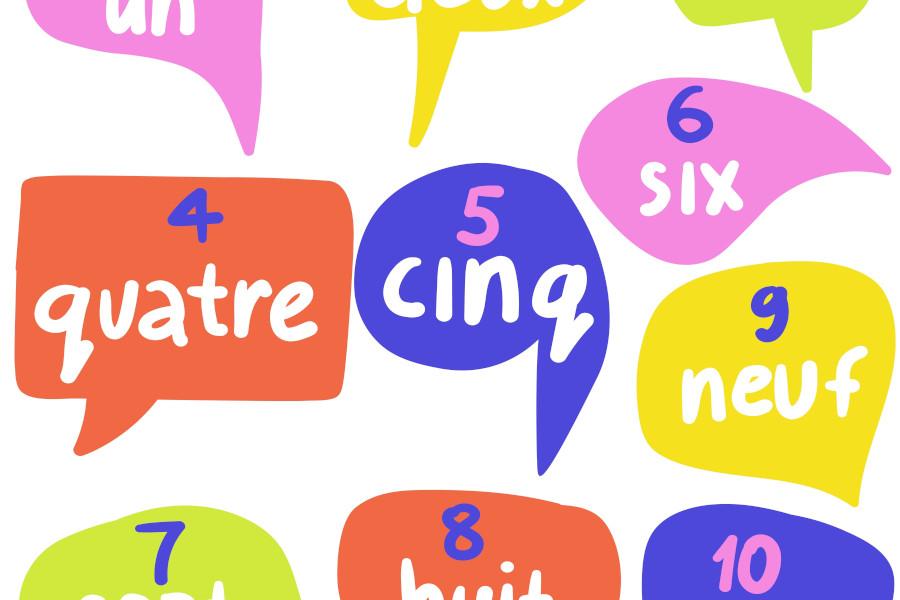
As always, the first stage is always to show the digits individually in order from 1-10 with plenty of choral repetition – ensuring pupils get to hear accurate, authentic and super clear pronunciation. Use interactive/electronic or hard copy laminated flashcards followed by lots of varied, quick activities to keep the children on task and enthusiastic about their learning.
Here are 10 quick activities that actually work in KS2! Tried and tested! Some super simple and others that will help with spelling the numbers too. For both specialist and non-specialist delivery models.
- Simple Counting
- Count me Out
- Sorting
- Singing
- Flashcards
- Count and Colour
- Maths
- Partner Bingo
- Wordsearches/Number
Puzzles
- Guess the number
1. Simple Counting
French counting activities are so undervalued! Many pupils will
need ample opportunities to hear and also say the numbers in French and choral
repetition is a safe, low stakes way to do it! The repetitive nature of the
activity is reassuring, and pupils can count together from number 1-10
first and when secure they can do 10-20 or
Pupils can count in loud voices, quiet voices, whispers or even
just mouthing. Counting out loud in French can help the mental maths required
in French for numbers over 70. It can help move the numbers into long term
memory and become almost an automated reflex. Not to mention improving
pronunciation. It will also support numeracy if pupils count up in two’s,
three’s, four’s etc supporting mental maths
2. Count me Out
Very similar to the Simple Counting Activity in that pupils count
up but the teacher decides a number or picks it randomly and announces it as
the ‘forbidden’ number. Pupils start all standing up and start to count up in French.
The order of who speaks is dictated by register order
or how they are sat. The pupil that says the
chosen number in French is eliminated. Then the counting continues until the
last number. This is a great way of constantly
counting – many times! 1-31 is probably the
absolute limit as otherwise it will take far too long. It can be a fast-paced
activity that keeps going until there is a winner at the end – the pupil that
never had to say the forbidden number out loud! The forbidden number could
change each round to try and keep the pupils on their toes.
3. Sorting
A firm favourite as it keeps pupils busy and makes a great pair
work activity. Pupils are given a desk-based activity where they have a number
of different objects and more than one of each object. Pupils have to collate
and count. Pens, pencils, coloured bricks and lego all make great sorting! They
can record on a mini whiteboard, but also if teachers have time in a printed
table that can them be linked to a maths activity if pupils have the skills
(graphs, percentages etc)
4. Singing
Putting numbers to music is a great way to help embed the new
vocabulary. Singing in general is very good for young learners. It helps
language development in the first language as well in any other further
language acquisition. It boosts confidence,
helps control breath and physical coordination as well as strengthen the
muscles in the face which are key for speech and language development. All
important skills are being developed at this
age. Rhymic regulation also boosts memory and concentration and is especially
effective for children with additional needs.
5. Flashcards
Flashcards are brilliant infographics that can be used in a
multitude of ways to engage our young learners. This can be in hardcopy and/or
electronic form depending on the resources available to the teachers.
If the teacher has a set of A4 laminated cards, they could have the digit image on one side and the French written word on the other. They could:
- Hold up a digit and say a number in French. Pupils respond by saying ‘oui’ if they believe it is correct or ‘non’ if they believe it is incorrect when they hear the number out loud. If teachers are concerned about noise control they could ask pupils to write oui/non on mini whiteboards or a simple tick/cross. Without mini whiteboards simple (and silent!) thumbs up/down.
- Hold up a digit and say two random numbers – one will be the corresponding number in French to that digit. Pupils respond saying back the correct number in French.
- Teachers could simply ask C'est quel numéro ? (Which number is it?)
- They could also put out the cards randomly and ask the 10 pupils chosen to use the written side and line up in the correct numerical order
6. Count & Colour
Less focus on oral reproduction but very suited to pupils that prefer quieter, more individual tasks. Pupils will need to know a selection of colours but it’s a great desk-based activity that will test their knowledge of both these groups of core vocabulary. Can be super simple or more complicated depending on the needs of the class.


7. Maths
Why not encourage the children to do some mental maths but in the
foreign language? They are often better in the foreign language than they are
in the first language as they feel less judged and on a level playing field.
Some simple addition and subtraction, followed by multiplication and division
with increasingly challenging sums and bigger numbers and the pupils gradually
learn more numbers in the foreign language. Some schemes like Language Angels
also already offer recorded maths questions so it can also be a way of working
on listening skills too. Pupils can try and write out the sum they hear before
doing the calculation.
8. Lotto
Also known as bingo in English! Very simple but does need a
little prep from the teachers and teachers to have sound knowledge of the
numbers in French themselves and be able to pronounce them accurately. Each
pupil needs a laminated bingo card and a marker pen with a cloth or tissue to
wipe clean the card after each round. The teacher reads out the numbers in
French, and the pupils cross off on their card if they have it. The object of
the game is to cross off five numbers in a row. Vertically, horizontally or
diagonally. To check their knowledge when the child shouts out ‘lotto’ ask the
child to read the numbers back to the class. If they are correct, all wipe
clean their cards and a new round starts. If the child has made an error, they
simply wipe off the incorrectly crossed number and rejoin the game to continue.
9. Wordsearches & Puzzles
Always a winner with young children. Pupils can have a range of
activities to complete at their desks with or without word banks to support. A
way to see the numbers in written form and start to become more familiar and
confident with the spellings.

10. Guess the Number
A great primary French numbers game. One pupil in the class thinks
of a number and their partner (or others in the class if operating a whole
class activity) guess what that number is. Provide a good range of numbers for
the pupils to work with and display the range so pupils stay focussed. They can
simply guess that number and be given a straight ‘oui’ (yes) when they guess
correctly or ‘non’ (no) when they guess incorrectly. Something a bit more enjoyable for the
children is when they get a hint back too so ‘plus haut’ for higher and ‘plus
bas’ for lower.
In short, numbers in French for kids can be fun and rewarding with
great outcomes! There are so many primary French games that require numbers.